A precise answer to the question trailers leave open: how souls-inspired combat, repeatable hunts, permanent loot, temporary Boons, adjustable difficulty, and co-op fit together.
Verified against official sources · August 13, 2026
Why the genre looks confusing
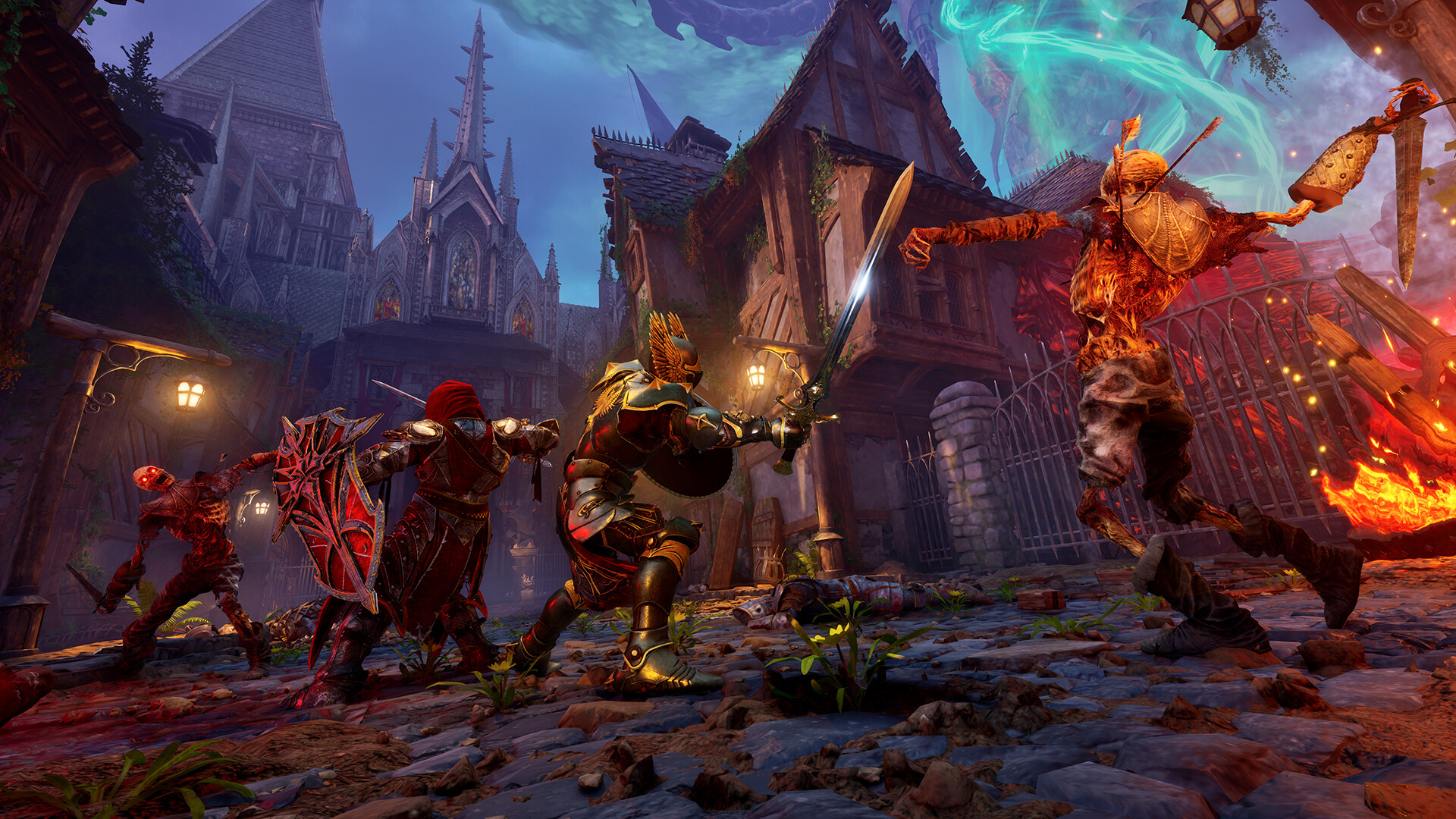
ProbablyMonsters combines several recognizable design languages. Combat is third-person, close-range, and skill-focused, with parries, finishers, melee abilities, supernatural powers, and angelic transformations. Boss encounters with the Dead Gods provide the spectacle and pressure associated with Souls-inspired games. The official Steam tags also include Action RPG, Souls-like, Roguelike, Hack and Slash, and Online Co-op, which explains why players use different labels for the same footage.
The structure around combat is equally important. Missions begin at Sanctus Clypeus, the Church headquarters and central hub. The War Table reveals quests and escalating threats in the city. Players choose a mission and difficulty, enter a Ward, encounter enemies and modifiers, gather equipment and temporary Boons, then return to the sanctuary. That is closer to a replayable hunt or operation than a single uninterrupted journey through one map.
Permanent progression keeps Crimson Moon from being a clean-reset roguelike. Loot can be purified and added to the long-term arsenal. Equipment can be upgraded. New missions, modifiers, and skill achievements expand the options available later. The temporary layer still matters: Nexus Gates offer Boons that evolve a build inside the current hunt and disappear when the run ends.
Source note: The genre description uses ProbablyMonsters’ phrases “action-adventure RPG,” “souls-inspired melee combat,” and “replayable runs.” The combined label on this page is an editorial explanation of those confirmed systems.
Official material describes combat as fast, gory, and expressive rather than a test of punishing repetition. A Nephilim can use light and heavy melee attacks, parries, finishers, Weapon Arts, supernatural abilities, and temporary angelic transformations. Executions are designed to vary by enemy type, giving combat a strong visual identity even when the mission structure repeats.
“Souls-inspired” does not answer every difficulty question. Crimson Moon includes a difficulty setting, and higher difficulty is tied to better reward opportunities. The developer also says challenge and enemy composition scale for solo or co-op. Those choices separate it from games that enforce a single fixed difficulty across the entire campaign.
Is Crimson Moon open world?
A Ward is the useful unit to remember. Each Ward can contain missions, elite encounters, minibosses, secrets, modifiers, and a larger boss objective. Clearing districts pushes back the Infernal Legion’s Hellgrowth and unlocks new challenges. The world changes as the war advances, while the hub gives the player a stable place to prepare.
Solo and co-op gameplay
The same mission framework supports one or two players. Co-op is optional, not required. With two Nephilim, the game adjusts difficulty and enemy composition, uses a shared Life Pool, allows resurrection, and encourages complementary loadouts and Boons. The important unresolved details—matchmaking, exact crossplay combinations, local split-screen, and cross-progression—are tracked separately in the co-op status guide.
What happens between hunts
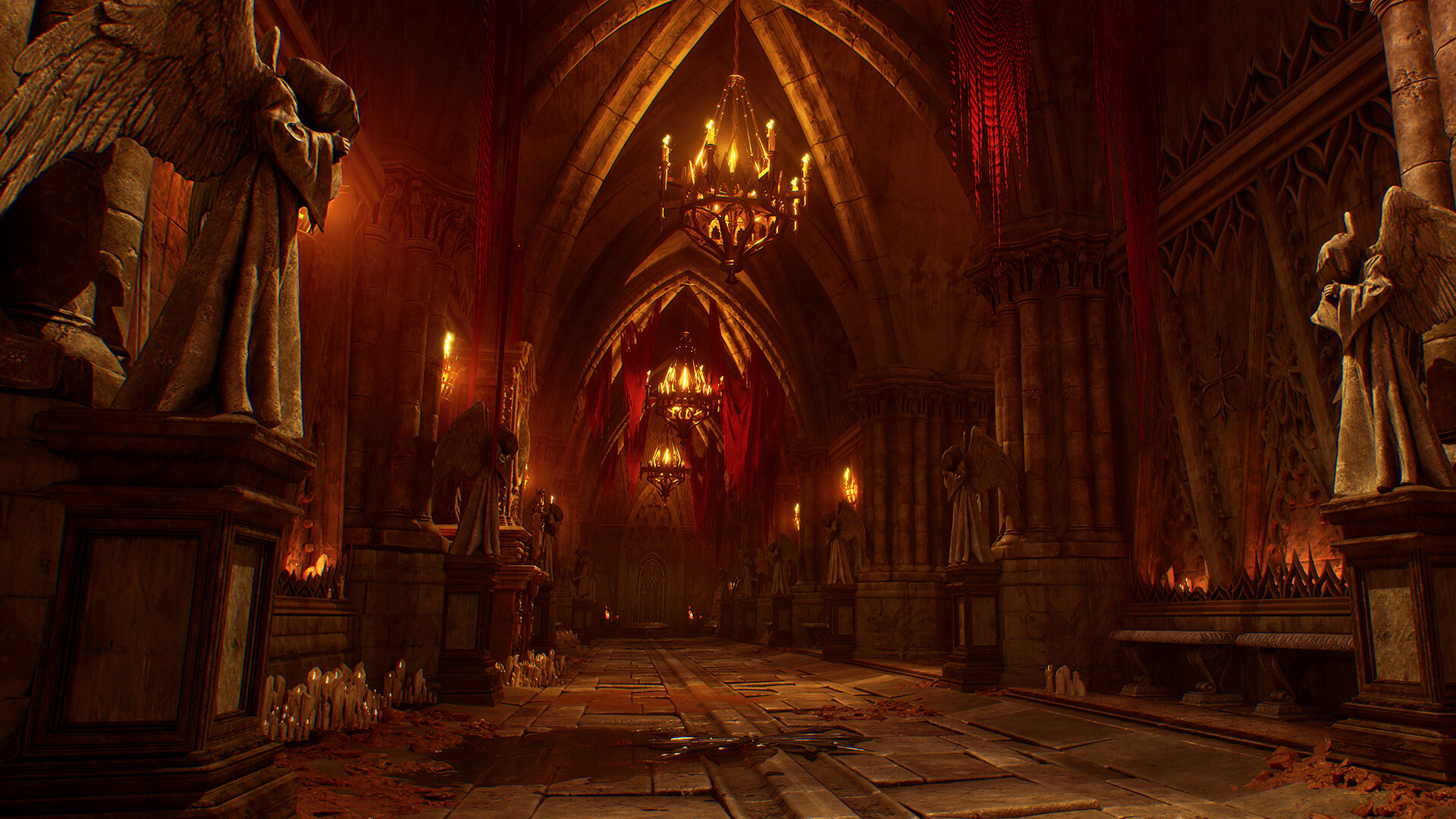
Sanctus Clypeus is more than a lobby. It contains the War Table, a Blacksmith for armor and weapons, NPC interactions, loadout preparation, and permanent upgrades. A successful hunt adds more than a completion marker: it can expand the equipment pool and reveal new missions or modifiers. The sanctuary therefore connects narrative progress, build planning, and the replay loop.
The split between permanent and temporary power is central. Weapons, armor, trinkets, purified equipment, upgrades, and unlocks belong to the persistent layer. Boons selected during a run belong to the temporary layer. An Angel is chosen before a hunt and adds another build tool, while Weapon Arts are associated with weapons. Our build guide maps those pieces without inventing launch-day meta rankings.
Frequently asked
Gameplay questions
What type of game is Crimson Moon?
Crimson Moon is a third-person gothic action-adventure RPG. Its melee combat is described as souls-inspired, while the wider game uses replayable missions, run-level powers, permanent equipment progression, selectable difficulty, and optional two-player online co-op.
Is Crimson Moon a Soulslike?
Souls-inspired is the developer's exact phrase for the melee combat. Crimson Moon includes parries, demanding encounters, bosses, and skill-based play, but its sanctuary, mission selection, adjustable difficulty, Life Pool, loot purification, and permanent arsenal make it structurally different from a traditional interconnected Souls game.
Is Crimson Moon a roguelite or roguelike?
It has roguelite-style runs and temporary Boons, but it also preserves purified equipment, upgrades, unlocks, and broader city progress. It is safest to call it a run-based action RPG with roguelite elements rather than claiming it follows every rule of either genre.
Is Crimson Moon open world?
Official descriptions focus on districts, Wards, repeatable missions, a central hub, and the War Table. That is a mission-based structure, not a confirmed seamless open world. Gildenarch can evolve across runs without being a traditional open-world map.
Can Crimson Moon be played solo?
Yes. Players can crusade alone or use optional two-player online co-op. Difficulty and enemy composition are designed to scale with the party.